Premium economy on Lufthansa review for corporate travel strategies
For corporate travel managers, any premium economy on Lufthansa review must start with a clear assessment of value versus policy constraints. Lufthansa positions its premium economy class as a bridge between regular economy and business class, which directly impacts travel budgets and traveller satisfaction. In a Média Business travel context, this intermediate class cabin can recalibrate how companies segment travellers by seniority, route criticality, and flight duration.
The core of any Lufthansa premium evaluation is the seat and the space it offers compared with economy class. Official data indicates a seat pitch of 38 inches, which is significantly above typical economy seats and gives measurable comfort gains on overnight sectors. The extra 3 inches of width, combined with deeper seat recline, changes how productive and rested travellers feel on arrival, especially when they must attend meetings immediately after landing.
From a procurement perspective, the premium economy cabin allows nuanced travel policies that differentiate between long haul and medium haul flight patterns. Instead of defaulting to business class on every intercontinental flight, travel buyers can reserve business class for the most critical missions and use Lufthansa premium for the majority of international trips. This tiered approach can reduce average ticket costs while still offering a clearly superior experience to economy Lufthansa products.
Any premium economy on Lufthansa review aimed at B2B stakeholders must therefore integrate hard metrics, traveller feedback, and duty of care obligations. When the class cabin is framed as a risk mitigation and productivity tool, not just a comfort upgrade, it becomes easier to justify within financial and procurement governance. That shift in narrative is increasingly important as airlines refine their economy cabin and premium propositions.
Seat, space and productivity in Lufthansa premium economy cabins
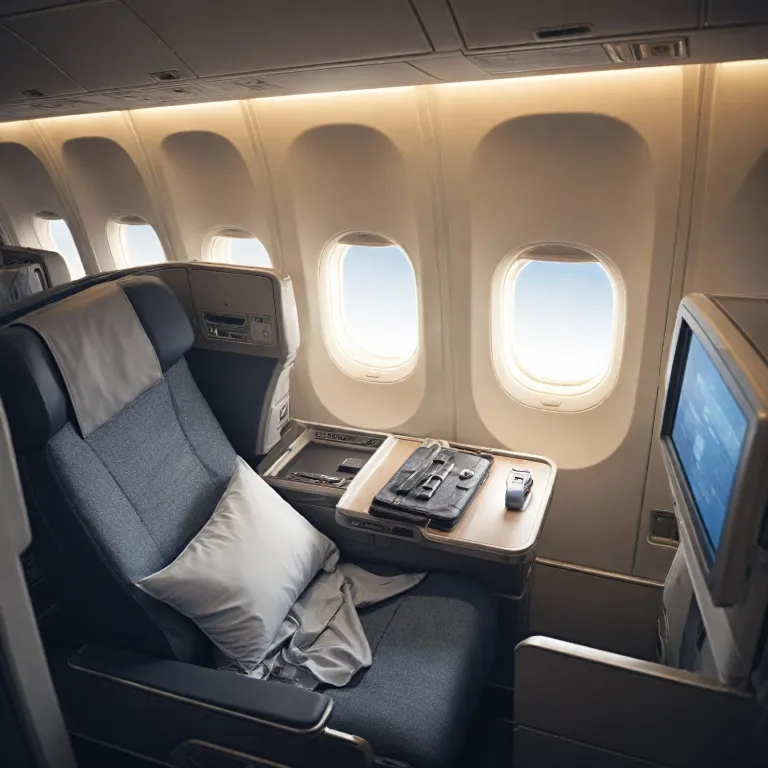
For business travel decision makers, the physical seat in Lufthansa premium economy is more than a comfort feature ; it is a productivity asset. The 38 inches of pitch and additional inches seat width compared with lufthansa economy create a noticeably different working posture. Travellers can open laptops without crushing tray tables, while the deeper seat recline still leaves enough room for economy passengers behind to function.
In many premium economy on Lufthansa review reports, the comparison with regular economy focuses on the economy seats geometry and legroom. Lufthansa premium adds a leg rest or footrest on many aircraft, which, combined with the enhanced recline, supports better circulation on long haul flight segments. For travel managers tracking absenteeism and recovery time after red eye flights, these incremental ergonomic gains can translate into fewer lost hours.
The seat shell and layout in the premium economy cabin also influence privacy and concentration levels. With fewer seats per row than in the economy cabin, there is less aisle traffic and reduced noise, which benefits travellers preparing presentations or reviewing contracts. Airlines increasingly highlight these qualitative advantages because they resonate with corporate buyers who must justify upgrades beyond pure luxury arguments.
When comparing economy Lufthansa and Lufthansa premium, it is useful to map seat characteristics to specific route types. On overnight flights between major hubs, the extra inches and improved seat recline can justify a policy that systematically books premium economy for travellers expected to work immediately on arrival. On shorter daytime sectors, travel managers might reserve premium seats for high value meetings, while keeping other staff in economy class to balance budgets.
Service, meal service and amenity kit expectations for business travellers
Service differentiation is central to any premium economy on Lufthansa review aimed at corporate buyers. Lufthansa positions its premium economy service clearly above lufthansa economy, with upgraded meal service, glassware, and often a welcome drink during pre departure. For many business travellers, this more attentive service sets the tone of the flight and reduces perceived stress compared with the more transactional economy class experience.
One verified clarification often requested by travel managers concerns catering and inclusions. In this context, Lufthansa confirms the following points for its premium economy class : "What is the seat pitch in Lufthansa's premium economy?" ; "Are meals included in Lufthansa's premium economy?" ; "Do premium economy passengers get extra baggage allowance?". These answers, combined with field feedback, help procurement teams benchmark the product against competing airlines on similar routes.
The presence of an amenity kit in Lufthansa premium, even if simpler than in business class, matters for Média Business travel policies. Eye masks, socks, and basic skincare items support better rest on overnight flight operations, which again links directly to duty of care and productivity metrics. When compared with many economy cabin offerings, where amenity kits are often absent or paid extras, this inclusion strengthens the value proposition.
Meal quality and timing also influence how travellers rate the overall service. A structured meal service with upgraded main courses, followed by a lighter second meal before landing, aligns better with corporate travellers’ working rhythms. For travel managers, these details can reduce the need for additional catering at the airport or immediately on arrival, which subtly optimizes total trip cost beyond the air fare alone.
Ground experience, boarding and airport touchpoints at Frankfurt
Any premium economy on Lufthansa review must examine the ground journey, because airport processes shape traveller sentiment as much as the cabin. At Frankfurt Airport, Lufthansa integrates premium economy passengers into a differentiated flow that often includes priority check counters, even when full priority check privileges are reserved for higher tiers. This separation from the main economy passengers queues can significantly reduce stress during peak travel periods.
Boarding procedures are another critical element for corporate travel managers assessing airlines. Lufthansa typically assigns a distinct boarding group for its premium economy cabin, which allows passengers to board earlier than most economy class travellers. Earlier boarding means better access to overhead bins, calmer settling time, and a smoother pre departure phase, all of which contribute to a perception of good service.
The boarding pass clearly indicates the premium economy class cabin, which simplifies wayfinding at the gate and in the airport signage ecosystem. For travel managers coordinating group travel or events, this clarity helps ensure that travellers are seated in the correct class without last minute confusion. It also assists travel agencies and TMCs when auditing tickets to verify compliance with class cabin policies.
At hubs like Frankfurt Airport and other major bases, the combination of dedicated check in zones, clearer boarding lanes, and more predictable boarding time windows can be quantified. When compared with the more congested flows for lufthansa economy, these efficiencies may reduce missed flights and tight connection risks. Over a full year of Média Business travel, such operational reliability can matter as much as the incremental comfort of the premium economy seats themselves.
In flight entertainment, connectivity and cabin ambience for Média Business travel
For corporate travellers, any premium economy on Lufthansa review must evaluate the digital and ambient environment on board. Lufthansa equips its premium economy seats with larger personal screens and upgraded flight entertainment options compared with many economy seats. A richer catalogue of films, series, and business content helps travellers manage long flight time more productively or relax more effectively.
The positioning of power outlets and USB ports at each seat in Lufthansa premium is particularly relevant for Média Business travel. Reliable power, combined with stable device stands and tray tables, allows travellers to work on presentations, answer emails, or review contracts throughout the flight. This contrasts with some regular economy layouts, where power access is shared or less ergonomically placed, limiting continuous laptop use.
Cabin ambience in the premium economy cabin is also calibrated differently from lufthansa economy. With fewer passengers per zone and a more restrained design language, noise levels are generally lower, and lighting schemes are tuned for rest on overnight sectors. Airlines like Lufthansa emphasize these soft factors because they influence how refreshed travellers feel, even when the seat does not fully match business class standards.
From a policy standpoint, travel managers can frame Lufthansa premium as a digital productivity environment rather than just a comfort upgrade. When the flight entertainment system, connectivity options, and cabin quietness are considered together, the product becomes a mobile workspace. This narrative helps justify premium economy allocations on key routes where business class would be excessive, but economy lufthansa would under deliver on traveller wellbeing and performance.
Cost, policy design and segmentation between economy, premium and business
For financial directors and procurement leaders, the most strategic premium economy on Lufthansa review focuses on segmentation between economy, premium economy, and business class. Lufthansa premium sits at a price point typically higher than lufthansa economy but significantly below business class, creating room for nuanced policy design. By defining clear criteria based on flight time, route criticality, and traveller seniority, companies can align comfort levels with measurable business outcomes.
One effective framework is to link class cabin eligibility to flight duration thresholds. For example, economy class may remain the default for flights under a certain number of hours, while premium economy becomes standard for longer intercontinental sectors. Business class can then be reserved for top executives, critical negotiations, or situations where arrival in optimal condition has a direct financial impact.
In this context, the tangible differences between economy lufthansa and Lufthansa premium, such as the 38 inches pitch, enhanced seat recline, and improved meal service, become negotiation levers. Travel managers can use these metrics when benchmarking against other airlines to secure corporate fares that reflect the real added value. Over time, data on traveller satisfaction and productivity can validate whether the premium uplift is justified compared with regular economy.
Agencies de voyages B2B and TMCs play a crucial role in operationalizing these policies through booking tools and approval workflows. By clearly coding premium economy fares and monitoring boarding pass data, they can ensure compliance while still allowing justified exceptions. For Média Business travel stakeholders, Lufthansa’s structured hierarchy from economy cabin to business class offers a coherent platform to balance cost control, duty of care, and traveller experience.
Strategic implications of Lufthansa premium economy for Média Business travel
When viewed through a Média Business travel lens, a premium economy on Lufthansa review becomes a strategic case study in traveller segmentation and brand alignment. Lufthansa, as a flagship airline, offers a premium economy product that signals reliability and consistency to corporate clients. This perception matters for companies that want their travel programmes to reflect stability and care toward employees.
For airlines and hôteliers business alike, the logic behind premium economy mirrors tiered room categories in corporate hotel programmes. Just as companies differentiate between standard rooms and executive floors, they can distinguish between economy seats and Lufthansa premium on key routes. This layered approach allows travel managers to align air and hotel policies, creating coherent comfort standards across the entire trip.
From the perspective of compagnies aériennes and agencies de voyages B2B, Lufthansa premium economy also influences how bundled offers are constructed. Packaging premium economy flights with higher category hotel rooms can create attractive yet cost controlled propositions for corporate events and roadshows. In contrast, using lufthansa economy and entry level hotel categories may be more suitable for internal training or lower priority travel.
Ultimately, the decision to integrate Lufthansa premium into a corporate travel policy should be based on data, not perception alone. Tracking traveller feedback on cabin comfort, service quality, airport processes, and overall flight experience will reveal whether the product consistently delivers good value. When the balance between economy, premium economy, and business class is calibrated correctly, companies can enhance traveller wellbeing while maintaining rigorous financial discipline.
Key quantitative insights on Lufthansa premium economy
- Seat pitch in Lufthansa premium economy is specified at 38 inches, significantly above typical economy class configurations.
- Seat width in premium economy increases by approximately 3 inches compared with standard economy seats on the same aircraft type.
- Premium economy passengers are entitled to two checked bags, each up to about 23 kilograms, exceeding many economy cabin allowances.
- Enhanced privacy features and improved in flight entertainment are positioned as core differentiators versus lufthansa economy products.
Frequently asked questions about Lufthansa premium economy for corporate travel
How does Lufthansa premium economy differ from regular economy for business travellers
Lufthansa premium economy offers more generous seat pitch, additional inches seat width, and deeper seat recline than regular economy, which improves rest and working comfort on long haul flights. The cabin also provides upgraded meal service, an amenity kit on many routes, and a quieter environment with fewer passengers per row. For corporate travellers, these differences can translate into better productivity and reduced fatigue compared with standard economy class.
Is Lufthansa premium economy a viable alternative to business class on long haul routes
For many companies, Lufthansa premium economy is a pragmatic alternative to business class on overnight or intercontinental routes where full flat beds are not strictly necessary. While it does not match business class in terms of privacy or sleeping comfort, the enhanced seat, service, and baggage allowance represent a substantial upgrade over lufthansa economy. This makes it suitable for mid level managers or trips where cost control is a priority but traveller wellbeing still matters.
What should travel managers check before booking Lufthansa premium economy
Travel managers should verify aircraft type, exact seat map, and seat dimensions, because configurations can vary across the Lufthansa fleet. It is advisable to confirm the presence of individual power outlets, specific seat pitch in inches, and whether an amenity kit is provided on the targeted route. Comparing the fare difference with both economy and business class will help determine whether premium economy aligns with internal travel policy thresholds.
Do premium economy passengers benefit from differentiated airport services with Lufthansa
Premium economy passengers on Lufthansa generally access dedicated check in counters and earlier boarding groups than most economy passengers, especially at hubs like Frankfurt Airport. While full lounge access is usually reserved for business class or status customers, these ground benefits still reduce queuing time and boarding stress. For corporate travellers with tight schedules or connections, such advantages can be as valuable as the in flight enhancements.
How can companies integrate Lufthansa premium economy into their travel policies
Companies can define clear rules that link eligibility for Lufthansa premium economy to flight duration, route importance, and traveller role. By reserving economy class for shorter flights and using premium economy on longer or strategically important routes, they can balance cost and comfort. Regular reviews of traveller feedback and total trip cost will ensure that the policy remains aligned with both financial objectives and duty of care commitments.