From film set to boardroom: why led volume virtual production news matters to travel buyers
Media business travel is quietly being rewritten by led volume virtual production news. As studios shift from traditional backlots to immersive LED volume stages, corporate travel managers must rethink how they budget, source, and govern mobility for production crews. The rise of virtual production and led volumes is no longer a niche technology story ; it is a structural change that alters where people travel, how long they stay, and which suppliers become strategic.
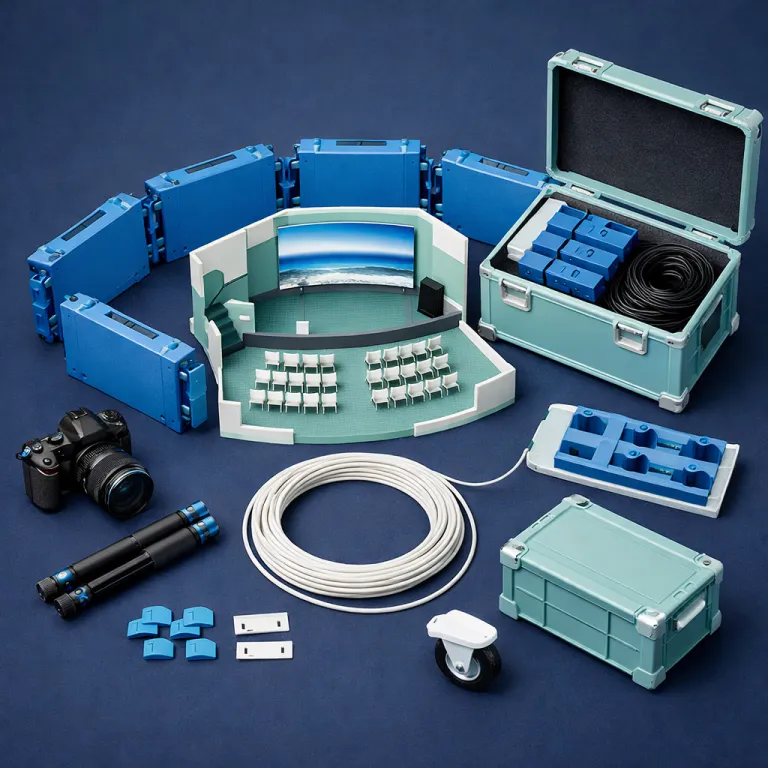
At the Versatile AI Virtual Film Base in Deqing, Absen and Versatile operate what is described as the world's largest LED virtual production stage, built around a monolithic volume wall with a diameter of about 50 meters. This single LED display area of roughly 1 700 square meters sits within a production studio floorplate of around 5 000 square meters, creating a vast volume stage that concentrates activity in one highly technical hub. For travel buyers, that concentration of production work into fewer, larger volumes virtual hubs means fewer location moves, but more complex, longer stays for highly skilled teams.
Every line item in a travel programme is touched by this shift, from air contracts for camera and lighting crews to hotel negotiations near each production studio. When a film or series moves into a led volume environment, the production system changes from location hopping to real time, screen based workflows that keep talent and technicians on a single stage. That means accommodation, ground transport, and per diem policies must adapt to extended, high intensity stays around the largest led facilities, rather than short bursts of travel across multiple countries.
Inside the new virtual production hubs: implications for mobility and accommodation
Led volume virtual production news is dominated by a handful of flagship hubs that now anchor global media travel flows. In Deqing, the Absen and Versatile collaboration shows how a single volume production complex can attract international film, advertising, and corporate media projects. Meanwhile, in Culver City, Sony Innovation Studios and Pixomondo operate an advanced virtual production studio that brings together LED walls, camera tracking, and real time CGI on a compact but powerful volume stage.
For travel managers and acheteurs voyages corporate, these hubs behave like new business travel corridors, similar to financial centres or tech clusters. Air capacity, premium cabin demand, and ground logistics must be aligned with production schedules that can change at short notice, especially when a virtual set or volume wall needs to be reconfigured overnight. Hotel partners near these studios must handle irregular check in patterns, last minute extensions, and a mix of high profile talent and technical crew, all working on compressed time frames.
Ground mobility is equally strategic, particularly for media teams shuttling between airports, hotels, and the LED stage. Corporate mobility programmes already explore tailored car services for high value travellers, and similar thinking now applies to production solutions for media crews. For example, strategic car service planning for entertainment and media travel, as illustrated by dedicated airport to studio transfer strategies, offers a template for moving camera, sound, and visual effects teams efficiently between dispersed urban locations and centralised virtual production facilities.
From location shoots to LED stages: rebalancing budgets, contracts, and risk
Traditional film and media projects once scattered their travel spend across many short location shoots, but led volume virtual production news signals a pivot toward concentrated, studio based operations. When a production moves onto a led volume stage, the number of physical locations shrinks while the intensity of each stay increases, reshaping how directions financières and directions des achats view risk and ROI. Instead of dozens of small hotel blocks and ad hoc flights, buyers now negotiate deeper, longer term agreements around a few key virtual production hubs.
This shift changes the profile of spend categories, with accommodation, local transport, and on site services around the LED walls and volume stages taking a larger share. Travel buyers must understand how the technology stack — from pixel pitch on the led panels to camera tracking systems and green screen alternatives — affects production timelines and therefore travel patterns. If a studio’s state art system can deliver more shots per day in real time, the total duration of stays may shorten, but peak demand for rooms and transfers will spike during compressed shooting windows.
Corporate mobility leaders can borrow thinking from other high complexity travel programmes, such as those optimising limousine and chauffeur services for executive roadshows. Approaches used to elevate corporate mobility in dense urban markets, like optimised limo solutions for business travel, can be adapted to move film crews between hotels, production studios, and ancillary facilities. By aligning travel policy with the cadence of virtual production work, buyers can reduce overtime, improve safety, and support the demanding schedules of media professionals operating on complex LED stages.
Designing travel programmes around LED volume workflows and real time production
Led volume virtual production news is ultimately about workflow, and travel programmes must mirror that operational logic. On a modern LED stage, directors, camera operators, and visual effects teams work together on a single set where the screen, lighting, and virtual environments are synchronised in real time. This integrated system reduces the need for separate location scouts, second unit shoots, and extensive post production, but it concentrates people and equipment into a single, highly choreographed space.
For travel managers, that means planning around the rhythm of volume production days rather than traditional location schedules. Call times can be extremely early or late to maximise use of the volume wall and LED display, especially when multiple productions share the same studio. Hotel contracts must therefore address flexible check in and check out, quiet floors for rest after night shoots, and reliable high bandwidth connectivity for teams reviewing video dailies and media assets from their rooms.
Policy design should also reflect the mix of travellers, from senior creatives to students and junior technicians gaining experience on cutting edge virtual sets. Training programmes and workshops often bring cohorts of students into these studios, adding seasonal peaks to regular production traffic. By integrating travel data with production planning tools, buyers can anticipate when volumes virtual stages will be busiest, adjust air and hotel allocations, and ensure that both work and rest time are protected for everyone on the production, from camera assistants to visual effects supervisors.
Sustainability, cost control, and duty of care in virtual production travel
One of the most compelling aspects of led volume virtual production news for corporate stakeholders is its potential impact on sustainability and cost. By replacing multiple location shoots with a single virtual production stage, companies can significantly reduce flights, ground transfers, and freight movements, directly lowering emissions. For directions financières, this consolidation also simplifies expense tracking and enables more precise forecasting of travel related costs around each production studio.
However, the concentration of travel into a few major hubs introduces new duty of care responsibilities for travel managers and responsables mobilité professionnelle. When dozens or even hundreds of crew members are based near a single LED volume for weeks, local risks — from health issues to infrastructure disruptions — can affect the entire production. Buyers must therefore work closely with hôteliers business to secure robust safety protocols, contingency room blocks, and clear communication channels for rapid response.
Cost control strategies should align with the operational realities of LED technology, where delays in camera tracking calibration or screen maintenance can extend stays unexpectedly. Integrating travel policy with production risk registers, and using best practices from optimised business travel expense management in hospitality, helps organisations manage overruns without compromising crew welfare. In this context, duty of care extends beyond basic compliance to include mental health support, rest time enforcement, and ergonomic considerations for teams spending long hours on high intensity, visually immersive sets.
Strategic partnerships between studios, airlines, and hotels in the era of LED volumes
As led volume virtual production news continues to shape media business travel, strategic partnerships become a competitive differentiator for all actors in the value chain. Airlines can position specific routes and schedules to serve production clusters like Deqing and Culver City, offering tailored baggage policies for camera and lighting equipment. Hôteliers business near these hubs can develop specialised packages for production solutions, including flexible cancellation, extended stay rates, and on site spaces for video reviews or small rehearsals.
Studios operating LED walls and volume stages, such as those managed by Pixomondo and Sony Innovation Studios, increasingly act as anchor tenants in local hospitality ecosystems. Their demand for consistent, high quality accommodation and transport creates predictable volumes that justify investment in upgraded rooms, meeting spaces, and connectivity. Travel agencies B2B and media focused TMCs can then curate preferred networks of hotels and ground suppliers that understand the specific needs of virtual production teams, from secure data handling to 24/7 catering.
For corporate buyers, the goal is to translate the technical sophistication of LED technology — from pixel pitch and led panels to integrated camera tracking systems — into equally sophisticated travel and mobility frameworks. By aligning contracts, service level agreements, and performance KPIs with the realities of real time, screen based production, organisations can support both creative excellence and operational resilience. In doing so, they ensure that the promise of virtual production and led volumes is matched by an equally advanced approach to media business travel in the hospitality industry.
Practical playbook for travel managers engaging with LED volume virtual production
To operationalise insights from led volume virtual production news, travel managers need a clear, actionable playbook. The first step is mapping current and future demand around key virtual production hubs, including Deqing’s Versatile AI Virtual Film Base and Sony’s Culver City studio. This mapping should capture not only the number of travellers, but also their roles, expected time on set, and the technical profile of each project, from simple green screen replacements to fully immersive LED volume shoots.
Next, buyers should segment suppliers based on their ability to support the unique cadence of volume production work. Hotels must demonstrate experience with media clients, flexible group policies, and the capacity to handle irregular check in patterns linked to real time production schedules. Ground transport partners should be vetted for their ability to move equipment safely, respect confidentiality around high profile talent, and adapt routes quickly when a production system or stage schedule changes at short notice.
Finally, governance frameworks must evolve to reflect the convergence of technology, media, and travel in these environments. Policy documents should explicitly reference virtual production, LED stages, and related workflows, ensuring that internal stakeholders understand why certain exceptions or premium services are justified. By embedding this knowledge into training for travel teams and approvers, organisations can support the complex, high value work taking place on today’s LED volume stages while maintaining control, compliance, and traveller wellbeing.
Key quantitative insights on LED virtual production hubs
- The LED display area at the Versatile AI Virtual Film Base in Deqing is approximately 1 700 square metres, forming a monolithic screen environment.
- The total stage floor area around this LED volume is about 5 000 square metres, allowing large scale sets and complex camera movements.
- The circular LED screen has an approximate diameter of 50 metres, creating an immersive 270 degree visual field for virtual production.
Frequently asked questions about LED virtual production and media travel
What is an LED virtual production stage?
A studio setup using LED screens to display virtual environments during filming.
How does LED virtual production benefit filmmakers?
It allows real-time scene changes, realistic lighting, and reduces post-production time.
Where is the world's largest LED virtual production stage located?
In Deqing, Zhejiang, China, at the Versatile AI Virtual Film Base.
How should travel managers prepare for virtual production projects?
They should map demand around key studios, secure flexible hotel and transport contracts, and align travel policies with production schedules and risk profiles.
Why are LED volume stages relevant for corporate mobility programmes?
They concentrate high value, time sensitive travel demand in specific hubs, requiring tailored mobility, duty of care, and cost management strategies.