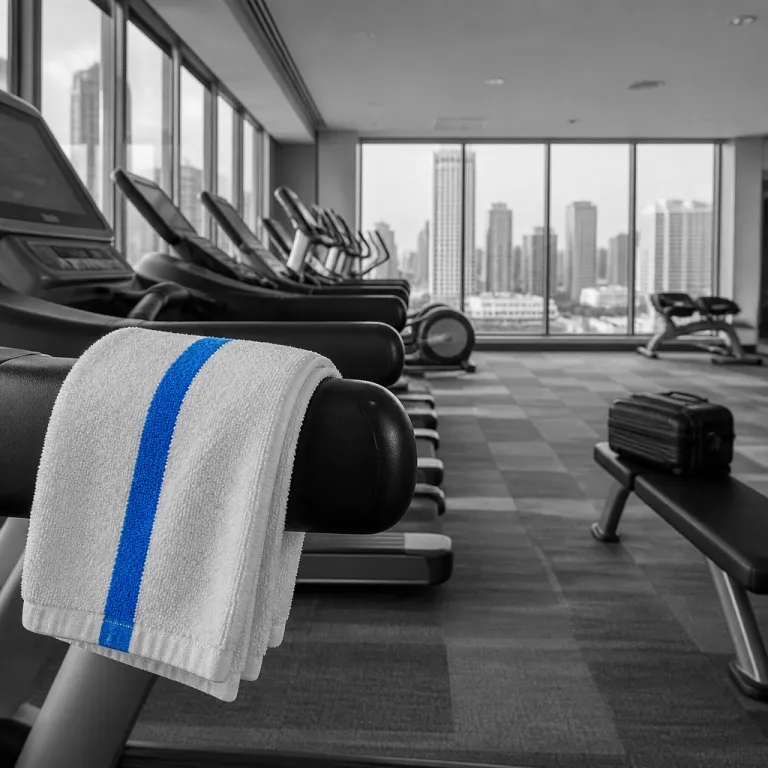
How the hotel fitness center now shapes corporate travel policy
Why the hotel fitness center now shapes corporate travel policy
For corporate travel managers, the hotel fitness center has moved from nice-to-have to non-negotiable. A growing share of hotel guests now expect consistent fitness and wellness standards during every hotel stay, especially on demanding multi-city trips. When hotels align their fitness center design with business travel needs, they directly support productivity, mental focus, and, over time, lower medical claims and absenteeism.
Industry data shows that hotels with fitness centers represent around 80% of the upper midscale and upscale inventory used in managed programs, and this ratio keeps rising as wellness becomes a core duty-of-care lever. For example, the American Hotel & Lodging Association’s 2023 Hotel Amenities Survey notes that fitness facilities are now standard in most business-oriented properties, while GBTA traveler-wellness briefings highlight exercise access as a top-10 expectation. In practice, this means that a hotel gym is no longer just a room with a few cardio machines and free weights, but a curated fitness ecosystem that must work for jet-lagged executives, airline crews, and project teams on tight schedules. Travel buyers who still treat fitness as a soft benefit risk missing a powerful lever for retention, employee loyalty, and long-term healthcare cost control.
For business travel decision makers, the question is not whether a hotel fitness center exists, but whether its access, equipment including connected devices, and operating model truly match corporate traveler expectations. Hotel management teams that understand this shift now position their fitness center offers as part of a broader wellness narrative, integrating running routes, yoga options, and in-room workout content into their sales pitches. This is where expert evaluation criteria, clear KPIs, and structured RFP questions become essential tools for procurement leaders and finance departments that need to link hotel fitness investments to measurable outcomes.
Designing fitness standards for business hotels and airline crews
Business hotels that serve airline crews and corporate travelers need fitness standards that go far beyond a generic hotel gym checklist. A modern hotel fitness center for this segment must offer 24/7 access with a room key, clear safety protocols, and a layout that supports short, intense workout sessions between meetings or flights. For travel managers, these design details translate directly into measurable wellness outcomes and fewer schedule disruptions caused by fatigue or illness.
In practice, the best hotel fitness concepts now combine traditional gym zones with flexible spaces for yoga, mobility work, and bodyweight training, which are particularly valued by frequent flyers with limited luggage. Many hotels deploy Life Fitness or similar state-of-the-art equipment including connected treadmills, bikes, and cardio machines that sync with corporate wellness apps, allowing HR teams to track participation and engagement where privacy rules permit. When hotel guests can log a structured workout during a short stay, they maintain routines that support resilience on long business travel rotations.
For B2B travel agencies and airline partners, aligning with hotels that treat the fitness center as core infrastructure simplifies duty-of-care reporting and program marketing. Strategic frameworks such as the unified commercial operating model described in this analysis of one team, one number, one stack show how hotel groups can integrate wellness assets into revenue management and corporate contracting. When hotel management, airline account teams, and corporate buyers share the same fitness and wellness KPIs, they can jointly design special rates that reward higher adoption of healthy behaviors.
From generic hotel gym to wellness hub in urban business districts
Urban business districts such as Dupont Circle in Washington illustrate how a hotel fitness center can become a genuine wellness hub for business travel. Properties around Dupont Circle that serve embassies, consulting firms, and airline offices increasingly promote their hotel gym and wellness spaces as part of a broader neighborhood value proposition. For travel managers, this urban context matters because guests can combine indoor workout sessions with safe outdoor running routes and nearby studios.
In Washington and similar capitals, the best hotels now position their fitness center offers alongside meeting rooms, co-working spaces, and executive lounges in corporate RFPs. A typical business hotel in Dupont Circle might highlight a state-of-the-art gym with Life Fitness cardio machines, racks of free weights, and Peloton bikes, while also mapping 5 km and 10 km running routes starting from the front desk. Airline crew schedulers and corporate mobility managers can then match specific hotels to traveler profiles, assigning more wellness-focused properties to long-haul crews or high-burnout teams.
Corporate buyers evaluating chain-level agreements should also understand which hotel brands consistently invest in fitness and wellness infrastructure. Insights such as those shared in this deep dive into chain ownership and corporate travel programs help clarify where fitness center investments are strategic rather than cosmetic. When a chain treats the hotel fitness portfolio as a long-term asset, travel managers can negotiate multi-year special rates that lock in access to high-quality gyms, yoga spaces, and in-room workout content across multiple cities.
Evaluating hotel fitness offers in RFPs and preferred programs
During RFP cycles, many corporate buyers still reduce the hotel fitness center to a simple yes-or-no checkbox. That approach no longer works in business travel, where wellness, productivity, and risk management intersect in complex ways. A more rigorous evaluation framework treats the hotel gym as a critical operational asset, with clear minimum standards and measurable performance indicators.
At a basic level, travel managers should request structured data on fitness center size, opening hours, and equipment including treadmills, free weights, functional training zones, and connected bikes. Questions must also cover whether hotel guests enjoy complimentary access with their room key, whether the center offers yoga mats or stretching areas, and whether any special rates apply for premium services such as personal training. For airline contracts, it is essential to confirm that crews arriving late at night still have safe, well-lit access to the gym, not just theoretical 24/7 availability.
Corporate buyers can go further by asking hotels to share their wellness strategy, including how they promote the hotel fitness offer at the front desk and in pre-stay communications. A robust program will show clear main content on the hotel website, intuitive skip to main navigation for accessibility, and transparent descriptions of Peloton bike availability, running routes, and any state-of-the-art Life Fitness installations. When these elements are documented and audited, finance leaders can confidently link wellness investments to reduced absenteeism, better results on employee satisfaction surveys, and stronger traveler loyalty.
Technology, content, and Peloton powered experiences for business travelers
Technology has transformed what a hotel fitness center can offer to time-poor corporate travelers. Smart equipment including connected treadmills, Peloton bikes, and digital strength stations now allows hotel guests to follow structured workout programs that mirror their routines at home. For business travel, this continuity is crucial because it reduces the cognitive load of adapting to new gyms in every city.
Hotels that invest in Peloton bike fleets or similar platforms can integrate curated content for yoga, strength, and cardio, which is particularly attractive for frequent flyers who prefer guided sessions. When a hotel gym combines Peloton bikes, Life Fitness cardio machines, and free weights with reliable Wi‑Fi and streaming, it effectively becomes a satellite branch of the traveler’s usual fitness circle. Airline partners and B2B travel agencies can then highlight these assets in program communications, positioning specific hotels as wellness-forward choices for high-stress roles.
On the digital side, corporate buyers should verify that the hotel website presents fitness information as real main content rather than a buried amenity, with clear skip main navigation for accessibility and compliance. Some hotel management teams now integrate virtual classes and in-room workout options into their apps, allowing guests to train in their rooms when the center is busy or when privacy is preferred. This hybrid model, combining on-site gym access with in-room and virtual fitness, aligns perfectly with flexible working patterns and the evolving expectations of business travel stakeholders.
Commercial models, special rates, and media driven wellness narratives
Wellness has become a powerful narrative in business travel, and the hotel fitness center sits at the heart of that story. For procurement teams and airline buyers, the challenge is to translate this narrative into concrete commercial models and special rates that reward both usage and outcomes. Hotels that treat their fitness assets as revenue enablers rather than pure costs are better positioned to craft creative offers for corporate clients.
One emerging approach links negotiated special rates to guaranteed access to the hotel gym, priority time slots for peak hours, or bundled wellness services such as yoga classes and guided running routes. In some cases, hotels in business hubs like Washington or around Dupont Circle create tiered packages where higher room categories include enhanced fitness benefits, such as complimentary laundry for workout gear or reserved Peloton bike sessions. For travel managers, these structured offers make it easier to justify slightly higher nightly rates by pointing to tangible wellness and productivity gains.
Media coverage and thought leadership now play a key role in shaping how these models evolve across the hospitality and air travel ecosystem. Analyses such as this perspective on the end of traditional distribution channels show how hotels can reposition their fitness and wellness assets within unified commercial strategies. As distribution, pricing, and content converge, the hotel fitness center becomes not just an amenity, but a strategic touchpoint where brand, duty of care, and traveler experience intersect for every business travel stakeholder.
Key statistics and operational benchmarks for hotel fitness centers
- Industry reports indicate that around 80% of business-oriented hotels now operate a dedicated fitness center, reflecting rising health awareness among corporate travelers and airline crews. AHLA’s 2023 Hotel Amenities Survey and GBTA wellness briefings both point to fitness access as a near-standard feature in the upper midscale and upscale segments.
- Hotels that invest in state-of-the-art fitness equipment and extended access hours typically report higher guest satisfaction scores, which correlates with improved guest retention and stronger corporate contract renewal rates, according to AHLA guest-satisfaction trend summaries.
- On-site fitness facilities with treadmills, weights, and bikes are often included in the room rate, meaning that for most hotel guests the hotel gym is effectively a free wellness benefit embedded in the negotiated corporate tariff.
- Properties that complement traditional gyms with in-room fitness options and virtual classes report higher overall usage, as travelers can train even when meeting schedules or time zone shifts make standard opening hours less practical.
- Hotels that systematically check equipment availability and review operating hours based on observed demand patterns are better able to align their fitness offer with peak business travel flows and airline crew rotations.
FAQ about hotel fitness centers for corporate and airline travel
What is a hotel fitness center in a business travel context?
What is a hotel fitness center? An on-site facility with exercise equipment. For corporate and airline programs, this facility becomes a core wellness asset that supports traveler productivity, reduces stress, and helps companies meet duty-of-care obligations. The most effective centers combine cardio machines, free weights, stretching areas, and sometimes yoga or functional training zones.
Are hotel gyms usually free for corporate travelers?
Are hotel gyms free? Often included in room rate. In most managed corporate programs, access to the hotel gym is bundled into the negotiated nightly rate, so travelers do not pay any extra fee at the front desk. Exceptions may apply for premium services such as personal training sessions, spa access, or specialized classes, which should be clarified in the RFP.
What equipment should travel managers expect in a business hotel gym?
What equipment is typically available? Treadmills, weights, bikes. For business travel, buyers should also look for modern cardio machines with connectivity, racks of free weights, and, where possible, Peloton bikes or similar connected platforms that support structured workouts. Clear information on equipment including mats, resistance bands, and functional training tools helps ensure that a wide range of fitness levels can be accommodated.
How can corporate buyers assess the quality of a hotel fitness offer?
Corporate buyers should request detailed descriptions of the fitness center, including size, opening hours, and equipment lists, and ideally ask for photos or virtual tours. They should verify whether access is controlled by room key, whether the center offers 24/7 availability, and how often equipment is maintained or replaced. Feedback from frequent travelers and airline crews can then validate whether the on-paper offer matches the real on-site experience.
Why does wellness matter so much in business travel programs?
Wellness matters because frequent travel, irregular schedules, and time zone shifts create physical and mental strain that directly affects performance and safety. A well-designed hotel fitness center gives travelers a practical way to manage stress, maintain routines, and reduce the health impact of constant mobility. For employers, this translates into better results on engagement surveys, lower healthcare costs over the long term, and stronger talent loyalty in high-pressure roles.
References
- Global Business Travel Association (GBTA), “Wellness in Business Travel” briefing notes (2022–2023).
- World Travel & Tourism Council (WTTC), “To Recovery & Beyond: The Future of Travel & Tourism” (2020) and subsequent health and safety updates.
- American Hotel & Lodging Association (AHLA), “2023 Hotel Amenities Survey” and guest satisfaction research series.